


There are truths you learn in your head.
And then there are truths you learn in your heart.
Most of my life, I didn’t know the difference.
When I prayed, the presence I imagined wasn’t the loving Creator I now preach about on Sundays. It was someone harsher, colder, unpredictable—far too similar to my father. I didn’t realize it, but I was praying to a god stitched together from emotional memory rather than revelation.
The heart remembers things the mind forgets.
I wish I had learned this in seminary. Instead, I learned it in recovery, then in therapy, and later in Bessel van der Kolk’s The Body Keeps the Score, which confirmed scientifically what my soul had discovered the hard way: trauma isn’t just something we recall; it’s something we carry.
This is my attempt to tell the truth about that—about how the heart stores fear, how those fears shape our image of God, and how healing begins in the body long before it reaches the head.
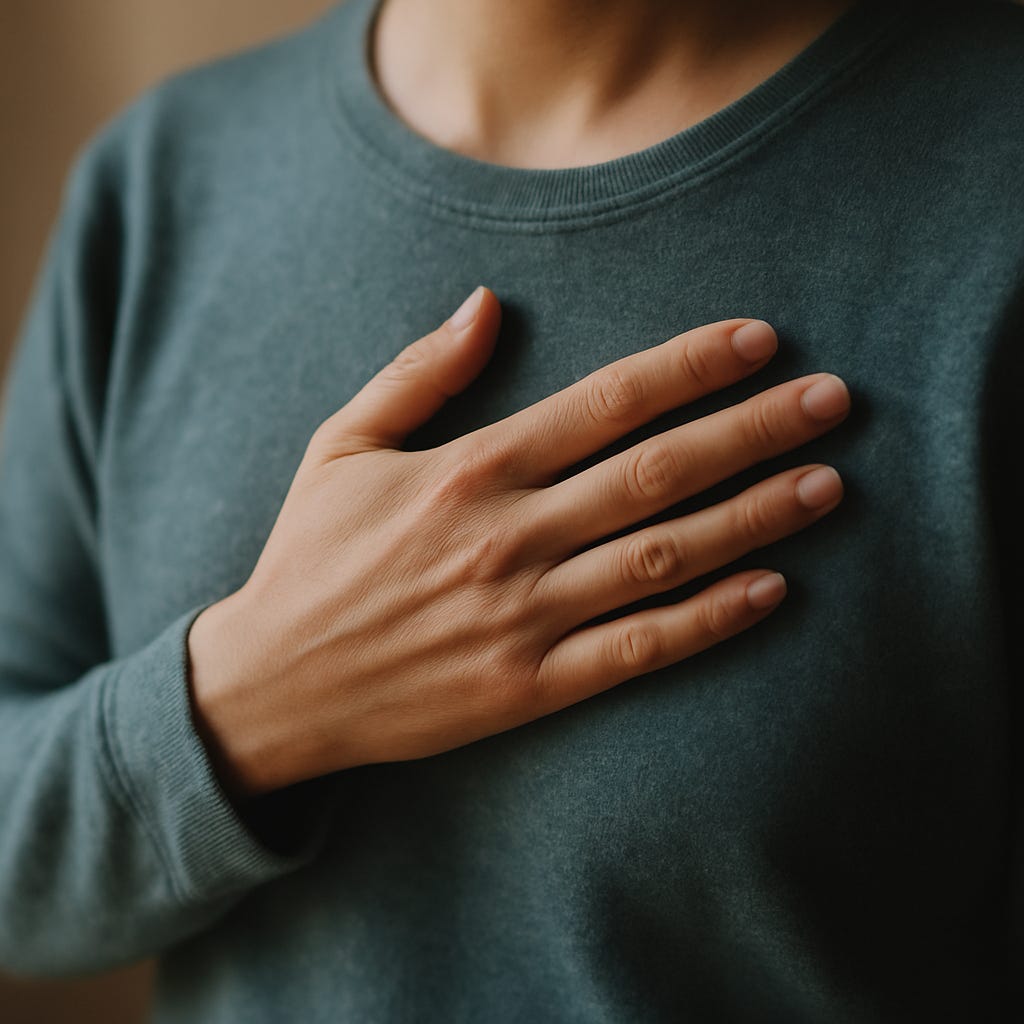
The Heart Has a Memory—Literally
Most of us assume memory lives only in the brain. It doesn’t.
Inside your chest is a network of about 40,000 neurons—a “cardiac nervous system.” It’s a small heart-brain that can:
learn emotional patterns
send information to the brain (in fact, more than it receives)
shape our sense of safety or danger
influence intuition, perception, and relational trust
This isn’t poetic metaphor. It’s physiology.
Your heart reacts before your thoughts do.
Your heart braces before your brain understands why.
Your heart remembers tones, glances, atmospheres—long after the moment passes.
Van der Kolk is right: the body keeps the score.
And the heart keeps a record of its own—a kind of emotional muscle memory.
What does this have to do with faith?
Jewish Thought and the Heart
Long before neuroscience, Jewish theology understood the heart (lev) as the center of a person’s entire inner life. In Scripture, the heart is not just the place of feelings—it is where we think, choose, remember, desire, decide, and turn toward or away from God.
The rabbis taught that the heart is where the deepest patterns of life are stored.
When Deuteronomy says, “You shall love the Lord your God with all your heart,” it means with the part of you that remembers and chooses, not just the part that feels inspired.
And when Psalm 139 prays, “Search me, O God, and know my heart,” it is asking for truth at the level of pattern, not mood.
In other words: Judaism has always known the heart carries history.
So does trauma. And so does the way many of us first learn to imagine God.
How Trauma Builds a False God
For decades, I prayed to a God I could never please. A God I feared. A God whose mood I was always trying to manage.
I thought that was faith. It was actually trauma-shaped theology.
The heart turns old emotional patterns into spiritual assumptions:
If love felt conditional, God will feel conditional too.
If safety was unpredictable, God will feel unpredictable.
If you had to earn worthiness, God becomes a supervisor.
These aren’t intellectual conclusions.
They’re embodied conclusions.
I learned this the day my sponsor asked me to describe God. What came out sounded less like the Creator of love and more like a cosmic version of my father—mercurial, disappointed, impossible to satisfy.
“You know,” he said, “that doesn’t sound like God at all. It sounds like someone you learned to fear.”
That landed hard.
It exposed something I had never admitted: I had been praying to my father’s emotional ghost and calling it God.
False gods aren’t born from bad theology.
They’re born from unhealed wounds.
Addiction and Heart Memory
Most people think addiction is primarily behavioral or chemical. There’s truth in that. But addiction is also a problem of memory—the heart’s memory.
When the heart remembers fear, it seeks numbness.
When it remembers shame, it seeks escape.
When it remembers loneliness, it seeks anything that feels like belonging.
Addiction often begins as an attempt to regulate emotional rhythms the heart learned long before we had language.
And false gods do the same thing.
Both addiction and false gods soothe pain temporarily but never heal it.
Real healing requires addressing the heart’s memory, not just the mind’s beliefs.
Healing Starts in the Chest
My transformation didn’t begin when I learned better doctrine. It began because something shifted in my body—especially in my chest. The Presence I eventually encountered was not the one shaped by fear.
Modern research shows the heart can learn safety.
When you pray with attention on the chest—slower breathing, gratitude, connection—you activate calmer nervous system patterns. Your body starts to have new emotional experiences, which create new internal memory.
Some call this “heart coherence.”
The Christian tradition has long called it prayer.
For most of my life, my heart tightened every time I prayed. That was old training. But through small, consistent practices—breathing, gratitude, openness—my nervous system began to associate prayer with safety rather than fear.
This didn’t undo trauma overnight, but it produced new internal memories:
moments of steadiness, connection, and presence.
Over time, those began to accumulate.
My false god began to lose credibility.
The real God became easier to trust.
Not because my thinking changed, but because my heart learned it didn’t need to clench in God’s presence.
Why This Matters for Faith Communities
The heart relearns by experience, not explanation.
If the heart keeps score, then churches need to understand something important:
Most people aren’t wrestling with doctrine.
They’re wrestling with memory.
Memories of judgment.
Memories of conditional love.
Memories of fear, silence, and shame.
People don’t need sharper theology. They need safer experiences.
This is why gentleness heals.
Why compassion transforms.
Why honest community builds trust.
What the Heart Knows Now
I no longer pray to the god of my childhood fear.
I pray with a heart that has practiced safety often enough to know it’s real.
These days, I begin prayer by starting in my chest.
A slow breath.
One honest moment of gratitude.
A pause to settle.
Not because it’s mystical—because it’s human.
These small practices have reshaped lifelong reflexes:
Less bracing. More openness.
Less shame. More honesty.
Less fear. More steadiness.
Healing didn’t begin when I adopted new beliefs.
It began when prayer stopped being something I thought through and became something I experienced with my whole self—heart, body, and mind.
If your chest still tightens when you pray, it doesn’t mean your faith is weak. It means your body is telling the truth about what it learned long ago.
The heart remembers.
And with time, the heart can remember something better.
Reflection
Where does your body still “brace” when you think about prayer, trust, or being fully seen?
What early emotional patterns shaped the way you first imagined God?
Scripture for the Journey
“I will give you a new heart, and put a new spirit within you.”
— Ezekiel 36:26
Both are promises that the heart can change—not by force, but through truth.
A Prayer for a New Heart
Holy One,
You know the stories our bodies carry.
You know the fears we learned before we had words,
and the false gods we built in the absence of safety.
Teach our hearts a new rhythm.
Let old memories loosen their grip.
Meet us where we still brace and hide.
Give us courage to begin again—
slowly, honestly,
with the kind of trust that grows over time.
Renew our hearts,
reshape our patterns,
and remind us that love is not something
we must earn or fear,
but something You never stop offering.
Amen.
The Elephant Chronicles are reflections based on my upcoming book, The Lie That Kills Us: We All Have Elephants. If you would like to know when the book is available click my email and let me know. I will tell you when it’s out and where to get it. pastored@addictionandfaith.coml
The book is available now: Amazon
